
Strategy CANADIAN NEWS April 17, 2026
Why Showrooms Still Matter in the Digital Age
Distributors find value – and close more deals – in a well-curated physical showroom.
Key Takeaways
• Physical showrooms remain powerful sales tools, helping distributors build trust, elevate perception and close deals through hands-on experiences.
• Well-designed spaces inspire creativity and shift conversations from transactional to strategic, showcasing higher-end products and decoration techniques clients can see and feel.
• Despite the rise of e-commerce, showrooms still play a key role, complementing digital by creating belief, deeper engagement and stronger client relationships.
“Wow.”
That’s the first reaction clients have when they walk into the 13,000-square-foot showroom of Counselor Top 40 distributor Eagle Promotions (asi/185320) in Las Vegas. The decorator, which works with everyone from “Joe the plumber to Disney,” invested about a quarter of a million dollars into creating and modernizing the space, which President Mario Stadtlander describes as “a mini-trade show every day at our office.”
Stadtlander and CEO Sean Ono worked to give the showroom an inviting, retail feel, comparing the vibe to a Nordstrom. The company regularly changes out stock, displaying all the latest apparel and hard goods from its supplier partners, with good, better, best options for a variety of styles and SKUs. The duo estimates that they have 1,200 garments from Counselor Top 40 supplier SanMar (asi/84863) alone in the space.
In the age of one-click digital shopping, it may seem counterintuitive to invest so much time and money in a physical space that’s not tied directly to the company’s production or warehousing operations, but for Ono and Stadtlander, it was a bit of a no-brainer. “It helps us actually close accounts,” says Ono. “When clients get here, they’re just like, ‘OK, you guys are legit. You’re not going anywhere.’”
The owners of Counselor Top 40 distributor Eagle Promotions (asi/185320) talk about their 13,000-square-foot showroom.
Jeff Moffett, owner of a Counselor Top 40 distributor Fully Promoted (asi/384000) franchise in Overland Park, KS, agrees, calling his 320-square-foot showroom “the closer.” Sales don’t come naturally to Moffett, a self-described introverted “spreadsheet guy,” but luckily, he adds, the showroom does the work for him. “If we get a potential customer in our showroom,” Moffett says, “the deal is essentially done. Rarely does a decision-maker come in and not ultimately place an order.”
The Benefits of Showrooms
A well-curated and intentionally designed physical showroom serves a variety of purposes for distributors. It builds trust, elevates perceptions and educates clients, giving them a multisensory experience with a variety of products and decoration techniques they may not have realized were a possibility.
“It’s irrelevant what people are actually buying. We want it to look sexy. You show the steak, even if they’re buying the hot dog.” Angela Jamieson, Brand Blvd (asi/145124)
“Seeing the build quality, testing functionality and getting hands-on makes a huge difference in confidence and decision-making,” says Brandon Kennedy, president of BrandCo Marketing (asi/455385), an affiliate of Counselor Top 40 distributor ASB (asi/120075).
A virtual tour of the BrandCo Marketing (asi/455385) showroom.
At their best, showrooms function as a hub for creative ideation and discussion. “They elevate dialogue from transactional to strategic,” says Jenna Sackett, brand engagement manager at Stahls’ (asi/88984). She adds that they allow partners “to build with us, not just buy from us.”
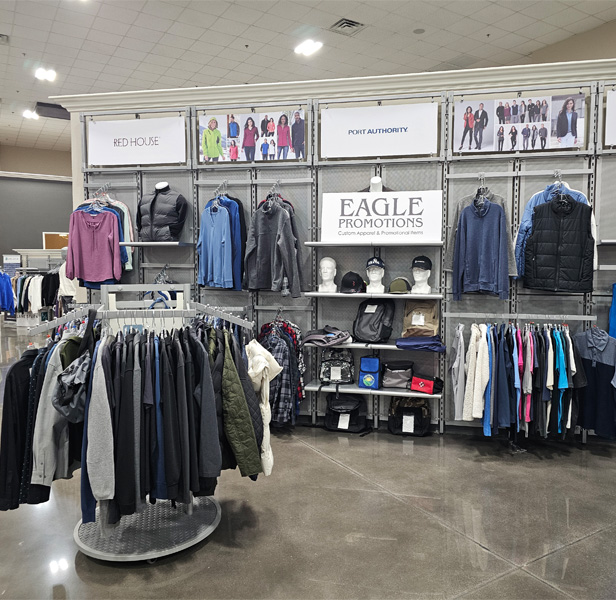
Counselor Top 40 distributor Eagle Promotions (asi/185320) made a big investment into its 13,000-square-foot showroom – an investment that owners say has paid off in countless ways.
Displaying higher-end, aspirational items can also change the sales conversation. St. Catharines, ON-headquartered Brand Blvd (asi/145124) made a deliberate choice to stock its showroom with retail brands and retail-inspired products, displaying covetable items from brands such as Under Armour and tentree.
“It’s irrelevant what people are actually buying,” says Angela Jamieson, director of brand experience at Brand Blvd. “We want it to look sexy. You show the steak, even if they’re buying the hot dog.”
The idea, she adds, is to steer clients away from the idea that promo is just “trinkets and trash,” and instead give them that visual and tactile connection to well-known, popular retail and lifestyle brands.
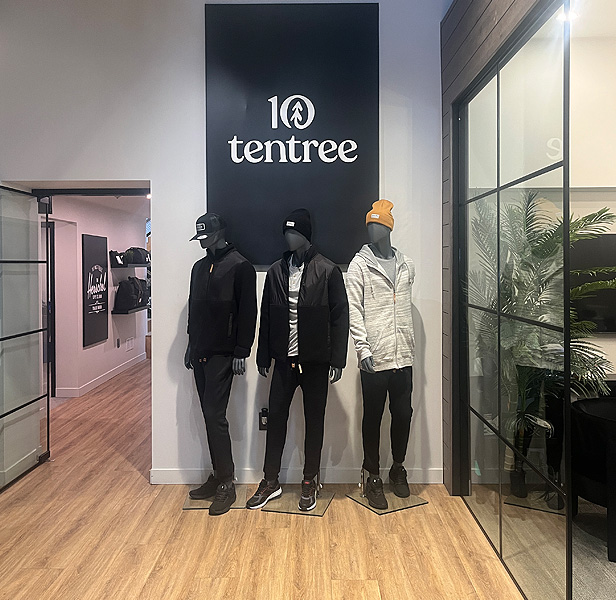
Brand Blvd (asi/145124) showcases higher-end retail brands like tentree in its showroom to help elevate perceptions of the industry and inspire clients.
Apparel decorators also get mileage out of a physical showroom. Culture Studio (asi/532911), a Chicago-headquartered decorator that works extensively in the music and entertainment space, offers a variety of specialty decorating techniques, which CEO Rich Santo says helps separate it from competitors.
The shop put together a decoration guide that lives online and in print to explain all of its capabilities, from puff embroidery to gel inks and beyond. But even the most evocative descriptions and highest-quality photography aren’t always enough to seal the deal. “It doesn’t necessarily tell the entire story,” Santo says. “Special effects don’t come off well on paper. You really have to touch and feel them.”
Culture Studio devotes a wall in its headquarters to finished goods, featuring multimedia and creative techniques. “That gives an artist or brand good inspiration of what’s possible,” Santo adds.
Showroom Best Practices
Promo showrooms serve many functions, but it’s important to optimize selection and layout to ensure the space is used to its fullest effect. Consider these strategies as you create – or redo – your showroom.
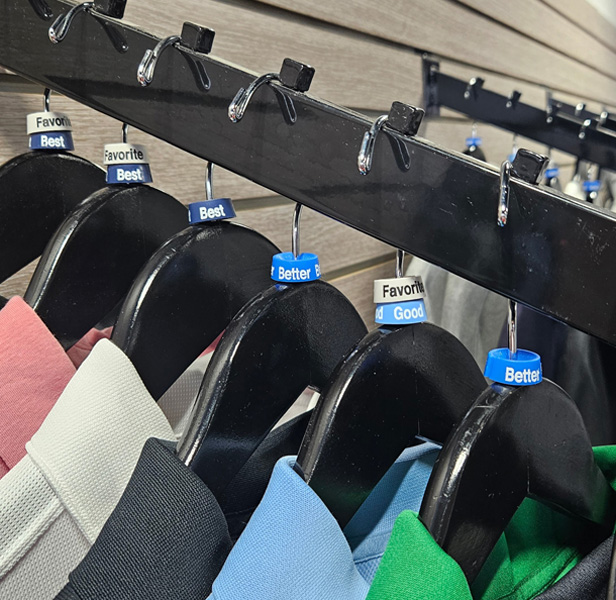
At Fully Promoted (asi/384000) in Overland Park, KS, owner Jeff Moffett says his 320-square-foot showroom helps his business close the deal with clients. The distributor has found success by marking samples as good, better, best or favorite with discreet doughnut hangers.
Curate Aggressively: A showroom shouldn’t be an explosion of everything available in promo. That would be overwhelming and counterproductive. Instead, set up designated areas for top-selling product categories and stock 10 to 30 styles of each, hitting a variety of price points.
Jeff Moffett of Fully Promoted (asi/384000) in Overland Park, KS, actually uses “hanger doughnuts” marked good, better, best and favorite to give clients easy visual cues as they’re browsing the showroom. “It’s been such a successful program,” he adds.
Location, Location, Location: Even though a promo showroom is a different animal than a retail store, the old real estate adage still rings true, says Everen Brown, owner of Everen T. Brown Advertising (asi/147570). “You need to have a stupendous location,” he notes, adding that his two-story building in downtown Salt Lake City’s central business district gets a lot of car traffic. And having that visible storefront lends his company legitimacy and an air of expertise that a home-based operation might not exude.
Keep It Fresh: Showrooms aren’t a set-it-and-forget-it proposition. Change out stock based on the seasons or to highlight trending items and categories. Eagle Promotions (asi/185320) has a staffer who manages stock for its massive showroom, CEO Sean Ono says, but the distributor also leans heavily on its supplier partners, who visit at least twice a year to refresh products and pull discontinued items from the shelves.
Invest in Premium Samples: Rather than relying on suppliers’ free samples, experts recommend investing in higher-quality pieces. “Start with the dream items, and then you can work down from that,” advises Angela Jamieson of Brand Blvd (asi/145124). Moffett agrees. “You’d be surprised by how many people want the best,” he says. “When we started displaying more expensive apparel, people started buying.”
Build for Collaboration: When designing a showroom, don’t forget to include meeting areas – inviting spaces where you can sit down and strategize with clients. “The highest-value square footage,” says Jenna Sackett of Stahls’ (asi/88984), “is where people gather to work through ideas together.”
Another benefit that’s sometimes overlooked is the value of a well-stocked showroom to distributors’ sales teams, says Nick Mirabile, vice president of national accounts for Proforma Printhouse (asi/491465), the Kalamazoo, MI-affiliate of Counselor Top 40 distributor Proforma (asi/300094).
“Sales and marketing folks need a place to go to brainstorm, get creative energy flowing, review options, touch products and get pictures of their product ideas over to clients,” says the Counselor 2020 Salesperson of the Year.
Do Showrooms Matter in the Digital Age?
Post-COVID, Jamieson says Brand Blvd has seen a marked drop in foot traffic to its offices. “To be honest, we don’t really use our showroom a lot,” she admits. “I do think the showroom as a concept is kind of dying a little bit.” But, Jamieson adds, she has no plans to scrap Brand Blvd’s display area. “It still serves a purpose because there has to be some kind of ode to what we do.”
“Digital creates visibility – physical space creates belief.” Jenna Sackett, Stahls’ (asi/88984)
It’s undeniable that online shopping has changed the game in retail and promo. In the U.S., e-commerce sales are expected to reach $1.8 trillion by 2030, accounting for 29% of all retail sales, according to a recent report from research firm Forrester. And in promo specifically, nearly half (48%) of distributors say they offer company stores, according to the Counselor 2025 State of the Industry Report. Plus, advancements in print-on-demand technology – including automation and AI tools – have made it easier than ever to go digital.
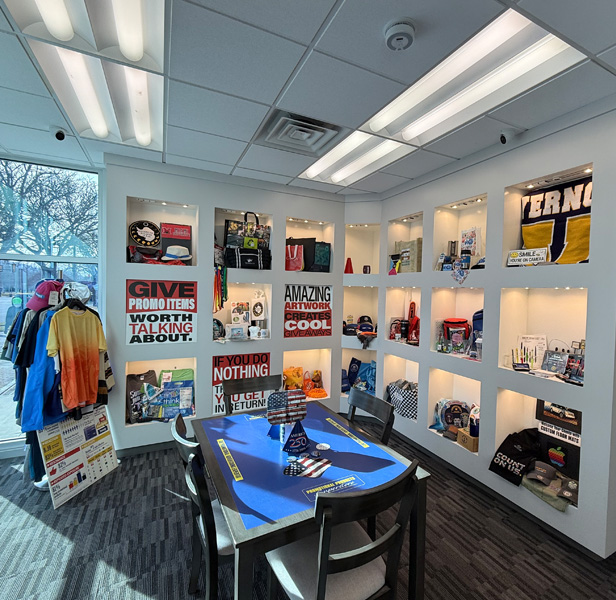
Everen T. Brown Advertising (asi/147570) uses lit cubes to help display promo samples in its Salt Lake City showroom.
But consider, too, that even digital-first firms have found value in physical spaces. Counselor Top 40 distributor Custom Ink (asi/173232), for instance, has more than 20 showrooms across the U.S., where customers can get expert design help, compare products and styles and work one-on-one with experts. Amazon recently announced that it plans to open more than 100 new Whole Foods grocery stores over the next few years, and is building a 230,000-square-foot big-box superstore in the suburbs of Chicago that’s slated to open in 2027.
There’s a way, Santo says, for the physical and digital to coexist and even complement each other.
Sackett sums it up like this: “Digital creates visibility – physical space creates belief.”
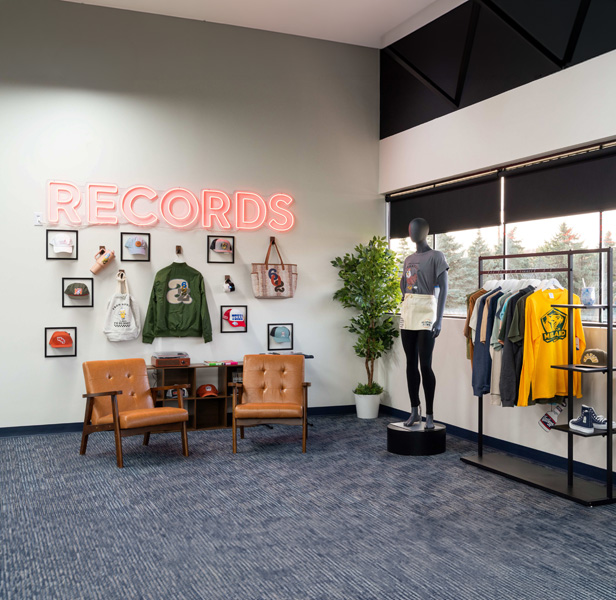
Stahls’ (asi/88984) SF-1 fulfillment and innovation center in Chesterfield, MI.
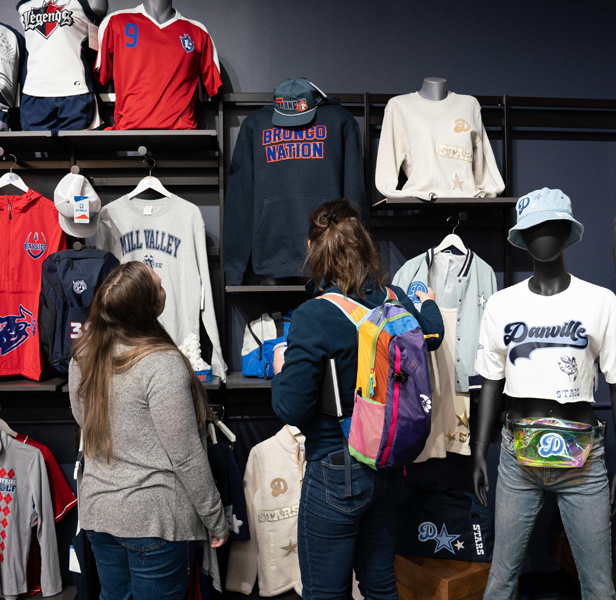
Stahls’ (asi/88984) SF-1 fulfillment and innovation center in Chesterfield, MI.
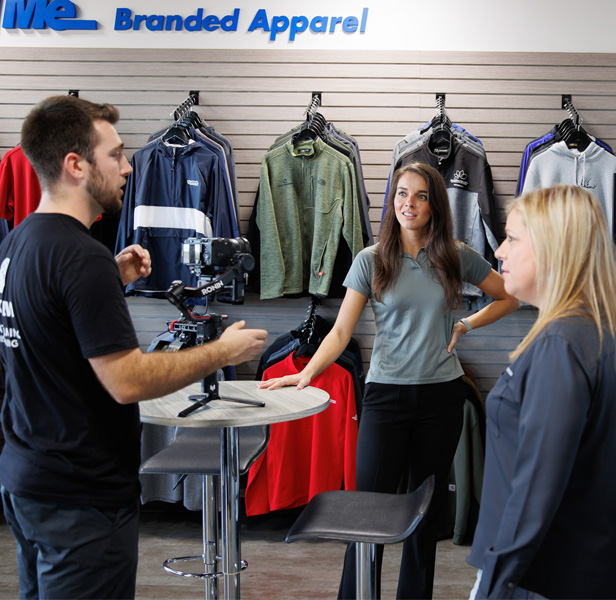
Fully Promoted (asi/384000) Overland Park, KS.
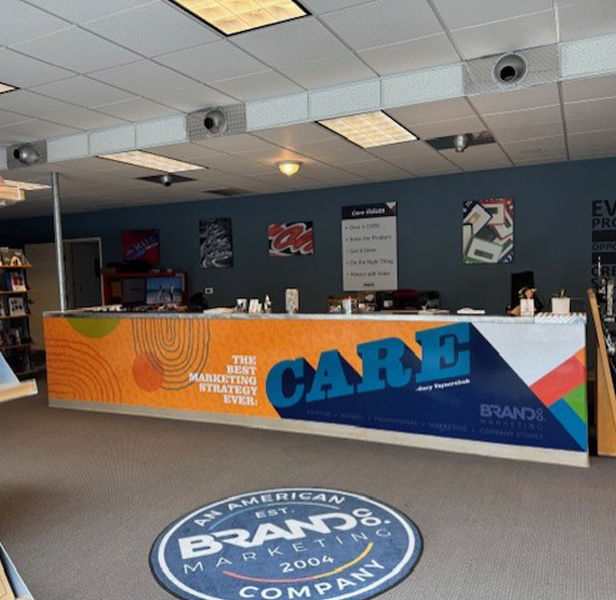
BrandCo Marketing (asi/455385) in Bakersfield, CA.
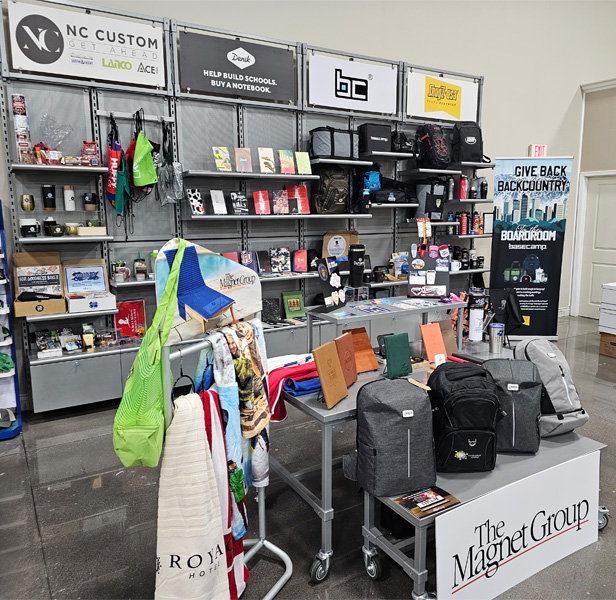
Counselor Top 40 distributor Eagle Promotions (asi/185320) in Las Vegas.
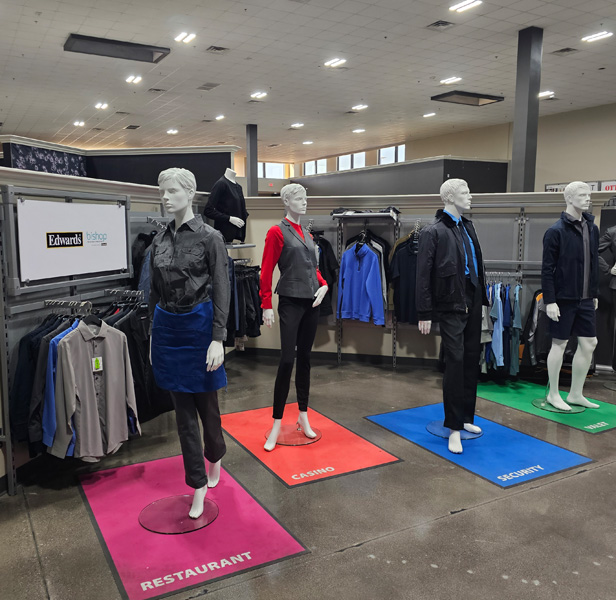
Counselor Top 40 distributor Eagle Promotions (asi/185320) in Las Vegas.