
Strategy September 16, 2026
Behind the Brand Activation Boom
Amid a rapidly growing desire for in-person events, branded activations are taking off – and putting creative promo squarely at the center of the action.
Key Takeaways
• Brands are increasingly investing in immersive, in-person activations where promo plays a central role.
• Successful activations require clear objectives and measurable ROI, which can be tracked through QR codes and lead-capture strategies.
• Simple, trend-driven activations that encourage participation often generate strong customer connections.
At the Cannes Lions International Festival of Creativity – the advertising and marketing industry’s premier gathering in June – business professionals from some of the world’s most successful companies showed off their biggest ideas on a global stage. Against the backdrop of the French Riviera (and amid a record-breaking heat wave), attendees interacted with their favorite brands through activations and displays that gave them not just a product, but an experience. Skincare brand Supergoop!, in partnership with The Female Quotient, offered sunscreen pumps for visitors to apply before heading outside, while Canva erected a cabana with a gelato station and beach-ready tote bags that provided a welcome reprieve from the grueling heat. For a festival that explored creativity, these brands certainly understood the assignment.
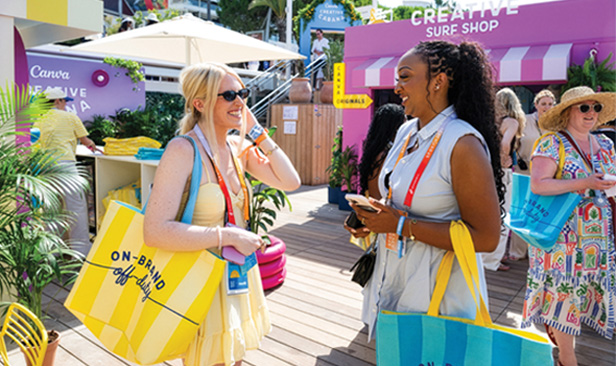
Canva’s beach-themed brand activation at Cannes featured a gelato station and attention-getting tote bags. Photo credit: Fred Marigaux
But creative brand experiences aren’t just happening at the world’s biggest events and festivals. Once you start to look for them, they appear everywhere. Walk into any trade show, expo or live event in 2026, and there’s a good chance you’ll see a “brand activation” in action. Promo giveaways at these events are no longer enough – today’s buyers and end-users want to participate in live, in-person experiences where print and promo products play a critical role.
Effective brand activations invite people to participate in an activity that introduces them to a product or service while helping a brand meet specific business goals. It’s not merely a product giveaway, but rather an experience that’s intentionally designed to drive customer reach, engagement, conversion and retention.
Successfully executing these brand activations, however, is both an art and a science. It’s not just about attracting attention, but rather gaining a careful understanding of client objectives, using intentional planning and deploying tracking capabilities to achieve ROI. Here’s a look at this growing trend – and how promo suppliers and distributors are strategizing around it.
Shifting Consumer Preferences
Digital innovation has given people and brands countless ways to connect online, but many consumers are experiencing what some have called “digital burnout.” From remote workers with limited human interaction to millions of people doomscrolling on social media, a growing portion of the population is increasingly feeling the burden of staring at a screen for multiple hours a day.
In particular, members of Gen Z are pushing back against a fully digital existence by expressing their preference for more in-person opportunities. According to a recent Harris Poll survey, 91% of Gen Z workers said in-person events are among the best ways to build social and interpersonal skills. Another report from payments platform Adyen found that most Gen Z consumers prefer to shop in person despite the availability of e-commerce. According to a report from event marketing platform Seeker, 85% of consumers are more likely to buy a product after attending an experiential event, while 87% say brand experiences are more memorable than TV ads.
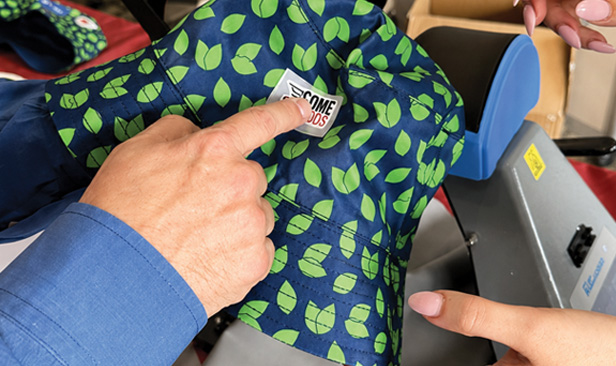
Sonic Promos (asi/329865) has executed custom hat bars at events and helped clients with activations such as pop-up surf shops and custom shoe fittings.
This shift toward in-person interaction, particularly with events, continues to outweigh the appeal of digital media. Often, digital experiences are merely reflections of in-person ones. For example, someone might post about their experience at an event or activation on social media because they want their followers to see what they’re up to in real life.
“People want to be able to show other people that they’re at an event doing something,” says Ben Pawsey, VP of marketing at Counselor Top 40 supplier HPG (asi/61966). “Younger generations now value in-person experiences over traditional advertising.”
That trend, Pawsey says, is on display at many of the world’s largest festivals, such as Coachella, South by Southwest and the FIFA Fan Festivals held in World Cup host cities this summer. “These festivals have become increasingly media-focused,” Pawsey adds, referencing several activations that caught his eye. He noted that, at a World Cup match he attended, he saw a Lay’s pop-up store “where you could go in and buy fancy bags of potato chips.”
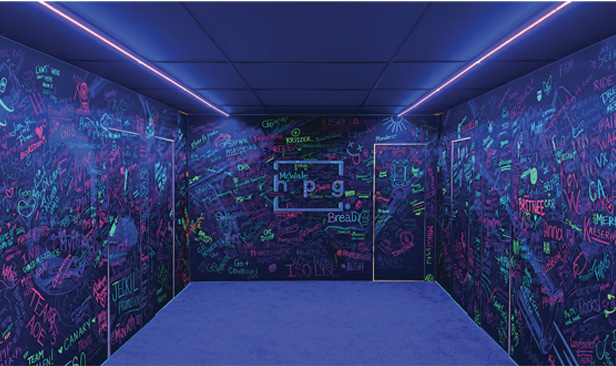
HPG’s (asi/61966) neon hallway installation, which attracted plenty of attention at a recent trade show.
Mallory Ebrahemi, vice president at Counselor Top 40 distributor Nadel (asi/279600), who works primarily with clients in the nightlife, hospitality and event production industries, started to notice her clients embrace live activations shortly after the COVID-19 pandemic. “People were looking for a way to have their spend go a little bit further,” she says. “So how can they bring people in and create an experience, whether that’s for a corporate client or even a nightclub?”
For example, a club in Las Vegas might host an activation when they don’t have any talent scheduled to perform.
“They’ll put on an activation around a theme, such as wellness, and invite the local Vegas community,” says Ebrahemi, who supports these campaigns by recommending brands to partner with and promotional products to offer throughout these experiences.
Tracking ROI
Showing up at large events and festivals doesn’t just align with shifting buyer and consumer preferences; it also allows brands to circumvent the growing complexities of traditional advertising.
“Digital advertising has become less effective … It’s getting harder and harder to track ads within email because of Apple tracker blockers, and Google is now siphoning off marketing emails,” Pawsey explains. “That’s making it harder to advertise on these platforms.”
By leveraging in-person events and experiences, brands can now reach customers in newer, more effective ways. These also afford them the opportunity to track interactions with prospects and garner leads more effectively.
“Simplicity often beats spectacle.”Seth Weiner, Sonic Promos (asi/329865)
Measuring success, however, doesn’t have to be difficult. Something as small as a QR code can make a big difference, says Seth Weiner, president of Gaithersburg, MD-based distributor Sonic Promos (asi/329865). “Maybe you have an oversized trade show booth, and you want to make sure customers interact with all four corners of your activation,” he says. “But how do you track those visits? That’s where you might implement a digital component where people can scan a QR code at each of the four corners. Once they’ve completed that, they get a prize.”
Weiner notes that while brands can embed similar methods in their digital advertising (where users scan a QR code and spin to receive a coupon, for example), there’s something compelling about an in-person event where people are incentivized to participate in an experience.
“If all you’re doing is asking people to scan a QR code, answer a few questions and enter into a digital raffle, sure, you’ll capture all the information, but you may not actually get that many participants because there’s no real experience there,” Weiner explains. “The physical element helps because you’re adding to the overall experience.”
Understanding the ‘Why’
Given all the potential opportunities that come with live, in-person experiences, it can be tempting to hit the ground running.
Weiner, whose distributorship has been working with customers on in-person brand activations for close to a decade, advises against moving too fast.
He says one of the most important ingredients for pulling off an experiential promo campaign at a trade show or another large event is to understand your client’s objectives, and suggests starting by asking some discovery questions, such as:
• Who’s your target audience?
• What message do you want to communicate?
• What’s your desired outcome?
It may seem straightforward, but Pawsey says it’s something many brands forget about when they create activations. “Something that people miss occasionally with activations is the why,” he notes. “Just like any type of marketing, people will make a load of noise, but if they don’t have the mechanism for capturing leads or gaining customer information, now they’ve done it for no purpose.”
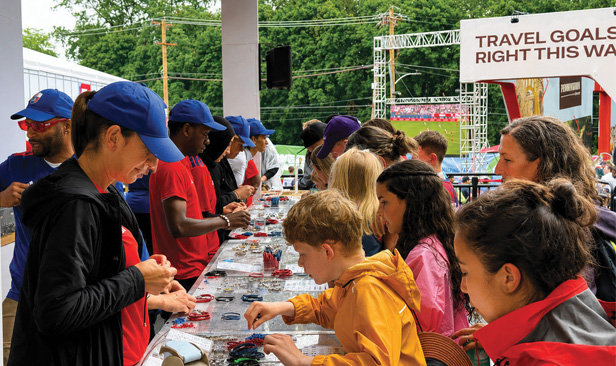
Soccer fans design their own “BofA Fan Bands” at the FIFA Fan Fest in Philadelphia’s Lemon Hill Park during this year’s World Cup.
It’s easy, Pawsey adds, to set up a booth and give products away to people who stop by. “But if you haven’t figured out why you’re doing it or your desired outcomes, you’ve kind of wasted your time.”
With those objectives in mind, HPG learned an important lesson: On the surface, an activation with more visitors might appear to bring in more leads. But those that attract fewer visitors often result in higher-quality leads, Pawsey says. “For some activations, it makes more sense to have a slower cycle time to get through the activation,” he explains, “because then you have a captive audience to have discussions with and build a bond.”
Pawsey recalls one trade show that HPG participated in early this year, where the supplier hosted seven different activations within a single booth. At first glance, the most successful activation appeared to be its neon hallway installation, where visitors could try out glow-in-the-dark pens available through HPG. However, when it came to generating the highest number of sales-related discussions, the winning activation was the supplier’s “make-your-own bag” experience, where visitors could experiment with heat transfers and patches to customize a mini-tote.
“There was a line and it took a minute for people to lay out which patches they wanted on their tote bag before they would stamp it,” says Pawsey. “That time gave our salespeople the opportunity to do some icebreakers around what distributors were designing and what their choices were, and then also gave them some time to talk business.”
These activations, adds Weiner, don’t have to be elaborate or expensive to make an impact.
“There are plenty of really good, engaging, successful experiences that you can do without spending thousands of dollars,” he adds. “Simplicity often beats spectacle.”
The Sonic team has worked with clients to produce large-scale activations such as pop-up surf shops, hat bars and custom shoe fittings, but Weiner says brands don’t always have to go that big.
“It could be as simple as putting candy into a jar and asking people to guess how much is inside,” he says.
“People want to be able to show other people that they’re at an event doing something.”Ben Pawsey, HPG (asi/61966)
Another way to lighten the load? Tap into existing trends.
Take the beaded friendship bracelet craze, a late 20th-century trend that has recently seen a cultural resurgence during Taylor Swift’s Eras Tour, where Swifties were just as likely to be seen wearing friendship bracelets as T-shirts and other concert merch. HPG and its subsidiaries noticed that trend and ran with it, hosting friendship bracelet-making stations and charm bars for customers to experience.
85% of consumers are more likely to buy a product after attending an experiential event. 87% say brand experiences are more memorable than TV ads.(Seeker)
Other brands, including Bank of America, capitalized on the charm bracelet trend by incorporating it into the events around the 2026 FIFA World Cup. Visitors to the BofA table at both the FIFA Fan Fests and various World Cup matches could build or pick up their very own “BofA Fan Bands,” then capture the moment in a digital photo booth that sent the shot directly to their phones.
Design Thinking
When it comes to designing a successful in-person activation, even seemingly small considerations can have a big impact. For example, Pawsey recommends “putting activations at the edge of your space, even though the temptation might be to put it in the middle.” This type of setup, he explains, ensures lines are formed in an organized fashion and helps avoid confusion about who’s waiting for what.
It’s also important to consider the design limitations you need to operate within, says Michael Levitt, president of The MRL Group (asi/258137), an advertising agency recognized for incorporating promotional products into brand displays and experiences.
“Step one is to figure out what’s known as functional requirements,” he says. “There are height restrictions, there are space restrictions, there are retail shopability guidelines.”
Levitt credits The MRL Group’s design team with being able to turn a client brief into an engaging brand experience, all while operating under sometimes stringent brand guidelines.
Often, though, the best ideas take time.
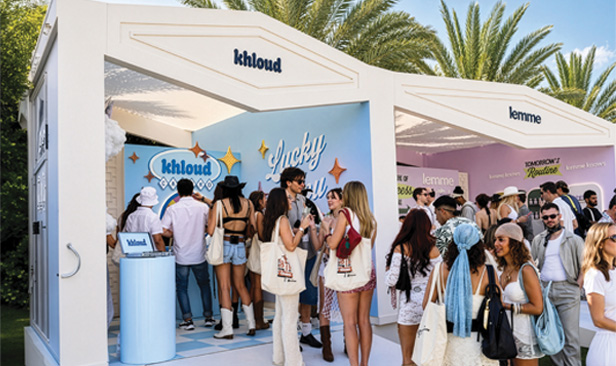
The MRL Group (asi/258137) partnered with Khloud popcorn to support its onsite Coachella activation.
“If you go for a 20-minute walk and come back to it and maybe sit on it for an extra day or two, it really does make a big difference,” Levitt says. “I always refer to it as designer’s block. It’s kind of similar to writer’s block. If we stare at something for too long, we’re not outputting our best work.”
It’s that commitment to developing the best idea within the confines of a customer’s requirement that allows Levitt and his team of designers to create unique displays that leave people wanting more.
“You’re seeing now a lot of disruption in the display space, because basic doesn’t do it anymore,” he says. “People are drawn to creativity, and that’s where we try to show up in a big way.”