
Commentary December 09, 2025
Expanding Promo Capabilities With Direct Mail
Direct mail is a natural extension of distributors’ existing capabilities, allowing them to support a broader range of client marketing needs.
Promotional products and direct mail share a core strength: Both create tangible, physical brand experiences. For distributors, direct mail is a natural extension of their existing capabilities and allows them to support a broader range of client marketing needs. Adding mail expands revenue opportunities, strengthens client relationships and positions distributors as more comprehensive marketing service providers at a time when organizations increasingly seek consolidated support across multiple channels.
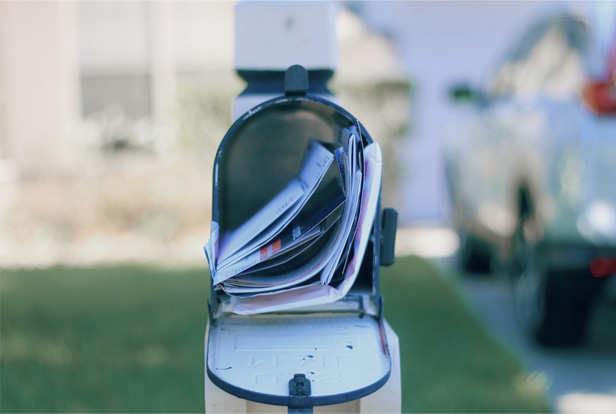
Direct mail is regaining traction among marketers today, and its renewed relevance creates a timely opportunity for distributors. Recent research provides clearer insight into the interest in mail. Findings from the 2025 U.S. Postal Service and Colorado State University study “Maximizing Marketing Impact” indicate direct mail achieved a Return on Ad Spend (ROAS) of 55%, a rate that exceeded major digital platforms such as Google Ads (21%), Amazon Ads (15%) and Facebook Ads (4.7%).
Survey data collected from 260 consumers in the same study further highlights direct mail’s relevance:
- 70% of respondents rated direct mail as “very useful” or “extremely useful” in supporting purchase decisions, compared with 50% for digital advertising.
- 80% reported being more likely to seek additional information about a brand after receiving direct mail.
- Younger consumers (ages 18-34) were 25% more likely to make a purchase after receiving mail than older groups.
- In addition, respondents frequently described direct mail as more personal, trustworthy and easier to review than digital alternatives.
For distributors looking to broaden their service mix, strengthen client relationships and provide more comprehensive marketing support, direct mail can complement the work they already do. Because distributors already manage product sourcing, customization, packaging and fulfillment, adding direct mail is a logical extension of their existing capabilities.
55%
return on ad spend for direct mail. (2025 Maximizing Marketing Impact study by USPS and Colorado State University)
Postal rates have increased several times since 2023, with additional adjustments expected as early as 2026. These cost pressures are prompting marketers to seek greater efficiency and performance from every mailed piece. Incorporating promotional items into mailings can enhance engagement and perceived value, helping improve the overall effectiveness of direct mail campaigns – particularly in an environment of rising postage costs.
The Direct Mail Opportunity
Adding direct mail presents new revenue potential for distributors because it opens the door to new service lines. Direct mail allows distributors to offer campaign strategy and planning, giving them the opportunity to upsell consulting, creative development, messaging and audience targeting, services that carry much higher margins than individual promotional items. It also introduces a range of printed components, from postcards and letters to brochures, inserts and catalogs, all of which can be produced through existing print partners.
“Direct mail transforms the distributor’s role from a transactional supplier into a strategic, revenue-generating marketing partner, positioned at the center of client campaigns rather than at the edges.”Lisa Cross, Alliance Insights
The financial impact can be dramatic: Instead of selling a $4 pen, a distributor could be selling a $40 to $150 per-recipient campaign kit or managing a 5,000-piece acquisition mailer, both of which generate substantially higher revenue and deeper client relationships. Direct mail transforms the distributor’s role from a transactional provider into a strategic, revenue-generating marketing partner, positioned at the center of client campaigns rather than at the edges.
Types of Direct-Mail Services
Here are three practical areas where promo distributors can begin offering direct-mail services. Each builds on capabilities many distributors already have and provides a pathway to higher-value, higher-margin deals.
1. Standard Mailers With Promo Tie-Ins
This is the easiest entry point for distributors who want to begin offering direct mail. This category includes print formats like postcards, letters, brochures and folded self-mailers that can be enhanced with small promo elements such as stickers, magnets, coupons or product samples. These enhancements transform a simple mail piece into a tactile brand experience. They are appropriate for product launches, promotional campaigns, event notifications and prospecting efforts.
2. Fully Assembled Kitted Mailers
Kitted mailers combine multiple items into a single, cohesive package and represent a meaningful step up in value and margin compared with standard mailers. Many distributors already have the core capabilities needed to offer these solutions. Kits may include apparel, desk accessories, printed materials, onboarding documents or welcome gifts, depending on the program’s purpose. Common applications include employee onboarding, recruitment and HR initiatives, customer-welcome campaigns and event-related mailings.
Because kitting and fulfillment are already familiar processes for many distributors – particularly mid- and large-sized firms that support ongoing corporate programs – the addition of mailing enhances, rather than disrupts, current services. These organizations often maintain established workflows for managing individual product items, inventory control and batch assembly, all of which translate seamlessly to direct-to-recipient mailings. In most cases, mailing is coordinated through a print-mail partner that manages addressing, sorting and USPS compliance, allowing the distributor to retain primary responsibility for sourcing, assembly and client communication.
This category enables distributors to deliver turnkey, high-perceived-value solutions that create memorable experiences for recipients and support company culture, engagement and brand storytelling. For many clients, these programs evolve into recurring initiatives, providing distributors with predictable repeat revenue and stronger long-term relationships.
3. Dimensional & High-Impact Mail
Dimensional mail, often referred to as “lumpy mail,” includes packages, boxes and thick mailers that stand out in the mailbox. It is one of the most effective formats in the direct-mail category because its physical structure immediately differentiates it from standard envelopes and flat mail. This heightened visibility and physical engagement are key reasons dimensional mail often outperforms other formats in driving attention, recall and response.
These packages typically contain a combination of promo items, printed materials, samples or invitations designed to reinforce a message or prompt a specific action. The mailing component plays a central role: Properly prepared, addressed and sorted dimensional pieces capture attention in the mailbox and benefit from higher open rates tied directly to their format. When coordinated through a mail-service partner, distributors can ensure compliance with USPS requirements and manage delivery efficiently.
Dimensional mail is widely used for B2B lead generation, enterprise sales outreach, membership and donor engagement, VIP communications, and account-based marketing. The format’s ability to create a memorable physical experience aligns closely with the strengths of promo distributors, who already excel at product sourcing, kitting and packaging. By integrating mailing into these capabilities, distributors can offer a comprehensive, high-impact solution that leverages both the tactile value of promo and the proven performance of dimensional mail.
Distributors Expanding Into Direct Mail
Some distributors have expanded into direct mail, either managing aspects of direct-mail production themselves or coordinating closely with print and mailing partners to deliver an integrated solution. Their capabilities often extend beyond promotional merch to include printed components such as postcards, letters, brochures and inserts.
While most distributors rely on mail-service partners for addressing, sorting and USPS-compliant preparation, some distributors also offer list management or list sourcing through partnerships. Many are well equipped to assemble dimensional mailers, gift boxes and multi-item kits because of their existing experience with branded kitting and fulfillment.
Rather than presenting themselves solely as distributors, they position their businesses as broader “marketing solutions” or “brand communications” partners. Counselor Top 40 distributor Proforma (asi/300094) is a prominent example, offering a combined portfolio of promo items, commercial print and direct-mail services. Some franchisees operate specialized direct-mail platforms capable of supporting both short-run postcard campaigns and higher-volume letter mailings. Counselor Top 40 distributor HALO Branded Solutions (asi/356000) also includes direct mail within its service mix and emphasizes kitting and fulfillment as core components of its client programs.
Other companies, such as Counselor Top 40 distributor 4imprint (asi/197045), extend their services into packaging, fulfillment and direct-to-recipient shipping for certain programs or campaign kits. While these services don’t typically include list procurement, postal optimization or advanced mail processing, they do indicate a willingness to handle the distribution of finished kits or mail-ready packages on behalf of clients.
4 Steps To Add Direct-Mail Services
Many distributors assume that adding direct mail requires large-scale operational changes. However, most can enter the market gradually by leveraging existing capabilities and forming the right partnerships. Consider these steps to keep investment low and risk manageable.
Step 1: Form Strategic Partnerships With Mail Service ProvidersCollaborate with a print provider that also offers mailing services or a dedicated mail-service partner. These partners already manage the operational components of direct mail – addressing, sorting, USPS documentation, variable-data printing, postage optimization and drop-ship logistics. By relying on established providers for these functions, distributors can maintain responsibility for client communication and project coordination while ensuring the technical details of mail preparation are handled by experienced specialists.
Step 2: Begin With Simple, High-Impact FormatsOnce a partnership is in place, distributors can offer direct mail in ways that closely align with their current workflows. Early projects might include postcards paired with small promo items, welcome kits for new customers or employees, event-in-a-box packages or seasonal mailers. These formats are relatively straightforward to assemble and often deliver strong perceived value. Starting with these accessible applications allows distributors to learn the process without introducing operational complexity.
Step 3: Expand To Include Creative & Tracking CapabilitiesAs distributors become more comfortable with direct mail, they can enhance their offerings by integrating creative and analytical elements. These may include personalized messaging, QR codes, personalized URLs or campaign-tracking dashboards that help clients evaluate performance. Some distributors, often through partnerships with print or marketing service providers, can incorporate digital retargeting tools that connect mail interactions to online behavior. These additions increase campaign accountability and effectiveness without requiring substantial changes in staffing or infrastructure.
Step 4: Develop Repeatable Processes for Long-Term GrowthOnce a few successful campaigns have been completed, the next step is to formalize the workflow. Standardizing kit templates, packaging options, production checklists, pricing structures and preferred-vendor relationships creates consistency and reduces turnaround time. A defined process not only improves operational efficiency but also enables teams to present direct mail as a reliable, ongoing component of their service offering, rather than a one-time request.
A High-Engagement Marketing Channel
Direct mail is reasserting its role as a reliable, high-engagement marketing channel, supported by measurable performance data and improved production capabilities. Distributors are well positioned to contribute to this growth due to their expertise in tactile marketing, fulfillment and product sourcing. By incorporating direct mail into their offerings, distributors can expand revenue potential while providing clients with integrated, results-oriented marketing solutions.
Direct mail delivers that same value through physical touch, high recall and real engagement. As marketers compete in an increasingly crowded digital environment, direct mail’s tactile, high-impact format breaks through the noise in ways digital channels simply can’t match.
Lisa Cross is principal analyst for Alliance Insights, part of PRINTING United Alliance, which is in a strategic partnership with ASI.