News October 27, 2026
ASI Power Summit 2026: A Steady US Economy Signals Promising Q4
Economist Mary Kelly, Ph.D., returned to this year’s event to give an overview of key data points – from consumer spending to tariffs.
Key Takeaways
• The U.S. economy remains strong heading into Q4, with continued consumer spending and projected GDP growth creating a promising outlook.
• Tariff uncertainty, rising costs and a cooling labor market remain key challenges.
• Economist Mary Kelly encouraged Power Summit attendees to capitalize on strong purchasing habits and pursue fourth-quarter business early.
The U.S. economy is “surprisingly resilient,” said Mary Kelly, Ph.D., an economist, retired Navy commander and CEO of Productive Leaders, during a presentation at the ASI Power Summit on Oct. 26. That bodes well for promo firms as they head into the all-important fourth-quarter selling season.
“We’re the top economy in the world, followed by China and Germany,” said the three-time Power Summit speaker. “People say we have a trade deficit, and we should – we export big and import small. For example, dollar store items aren’t made here.”
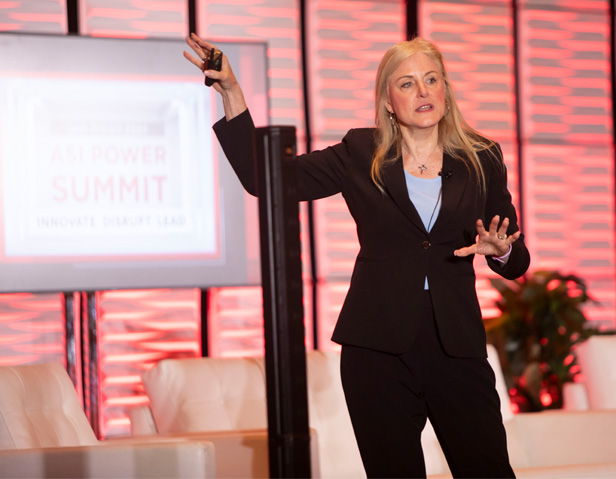
Mary Kelly provided an overview of the U.S. economy, including inflation and tariffs, at the ASI Power Summit on Oct. 26.
Kelly estimated that the U.S. will see 2.4% year-over-year GDP growth in 2026 and said Q4 looks promising since consumers are still spending where and when they can. “Spending habits are holding up,” said Kelly, “and the middle class is steadily moving into the upper middle.”
Still, areas of concern remain. Food costs are up in general, energy costs are rising (due in large part to AI data centers) and the U.S. oil reserves are down to their lowest since 1982 as a result of drawdowns following the Russia-Ukraine conflict in 2022 and the U.S.-Iran conflict in 2026.
Meanwhile, hiring has “cooled,” the labor market is “fragile,” with participation at just under 62% (ideally, it should be closer to 67%), and interest rates above 7% creating challenges for potential homebuyers.
ASI’s Sara Lavenduski speaks with Mary Kelly about “the K-shaped economy” and expectations for Q4 business activity.
But at the top of the list of challenges is uncertainty around tariffs – it’s difficult to keep up with costs, and while most countries have responded to levies with negotiation, major trading partner Canada has since looked to China and the EU to establish new trade agreements.
“People still aren’t sure what’s actually being tariffed and at what rates,” she said. “Your challenge as business owners is to manage both the expense and the uncertainty.”
Despite the challenges, Kelly told attendees to lean into Q4 and take advantage of strong purchasing habits by selling early. “We’re anticipating GDP growth, which is partially consumer spending,” she said. “It grew more than 2% earlier this year, thanks in large part to retail spend.”