Strategy March 31, 2026
4 Highlights From Impressions Expo Atlantic City 2026
Direct-to-film printing advancements and solutions to celebrate America’s 250th birthday were among the sights at the show geared toward apparel decorators.
Key Takeaways
• Direct-to-film printing remains a dominant force, with new automation, improved print quality and print on demand-friendly solutions boosting speed and efficiency.
• Suppliers are tapping into timely opportunities, including America’s 250th anniversary merch and trending styles like muted tie-dye and specialty washes.
• Sustainability and customization stood out, with products like USA-made woven blankets featuring recycled materials, solar-powered production and no minimums.
The hottest new styles from apparel suppliers and latest innovations from equipment manufacturers were all on display at Impressions Expo Atlantic City, which was held March 25 to 28 at the Atlantic City Convention Center. Here are the top highlights from this year’s show.
1. Direct-to-Film Printing Continues To Dominate
Direct-to-film (DTF) printing, a major force in the printing and apparel decoration space in the last few years, is still going strong. Vendors showed off solutions that offered more vibrantly colored prints, better adhesives and other advancements.
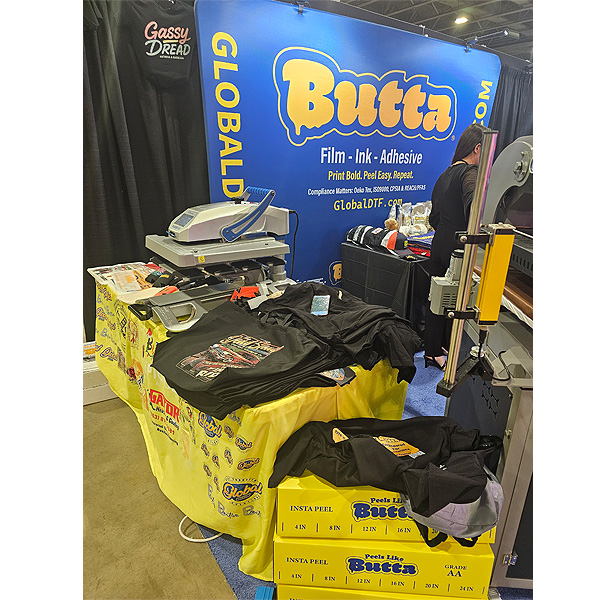
GlobalDTF was showing off its Butta line of DTF products at Impressions Expo in Atlantic City.
Largo, FL-based Global DTF was front-lining its Butta line of products, leaning into the theme with boxes shaped like giant sticks of butter and giving away bags of buttery movie popcorn to attendees. The company says the line of premium consumables includes “the softest, silkiest DTF film you’ll ever press,” among other products.
Brown Manufacturing Group offered a DTF solution that easily conforms to print-on-demand production models. The Stomper Yet-Tee L-Line automatic DTF press allows operators to load a garment and scan a barcode, and the machine takes over from there, printing, cutting, powdering, curing, flipping and placing a design onto a shirt, says Steve Harpold, a sales rep for Brown.
“The user just stands here, loads the next shirt and the process repeats itself,” he adds. “We can follow the same workflow we love on the [direct-to-garment printing] side.”
Thanks to the one-touch automatic printing process, operators can output as many as 180 finished pieces in an hour, according to Harpold.
2. Ramping Up for America’s Semiquincentennial
With America’s 250th birthday approaching in July, suppliers had solutions for distributors and decorators looking to help clients take advantage of the event. While the official America250 logo is a licensed design, it’s free to use phrases like “USA 250” on branded gear, says Michael Reisbaum, senior vice president of special markets at Unionwear (asi/73775), a New Jersey-based supplier of union-made, domestically manufactured caps, totes and padfolios.
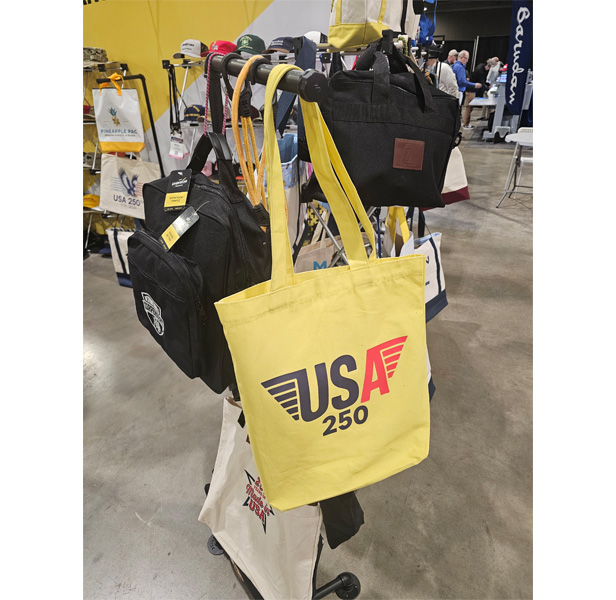
Unionwear (asi/73775) offered Made-in-USA merch to help distributors and decorators market the country’s semiquincentennial.
The 250th is an “incredible marketing opportunity” for clients, he says, but adds this caution: “If it says, ‘Yay, America,’ on the front, it should probably say, ‘Made in USA,’ on the inside too.”
3. Make a Sustainable Statement With Woven Blankets
Another Made-in-USA company at Impressions Expo, FiberArt, was displaying its custom-woven photo blankets. The company, which is based in the foothills of western North Carolina, can take any image – as low quality as 760 by 1,025 pixels – and transform it into a weave file that’s then made into a 100% cotton blanket, says Enterprise Account Executive Abby Clark, whose grandfather started the business in 1988.
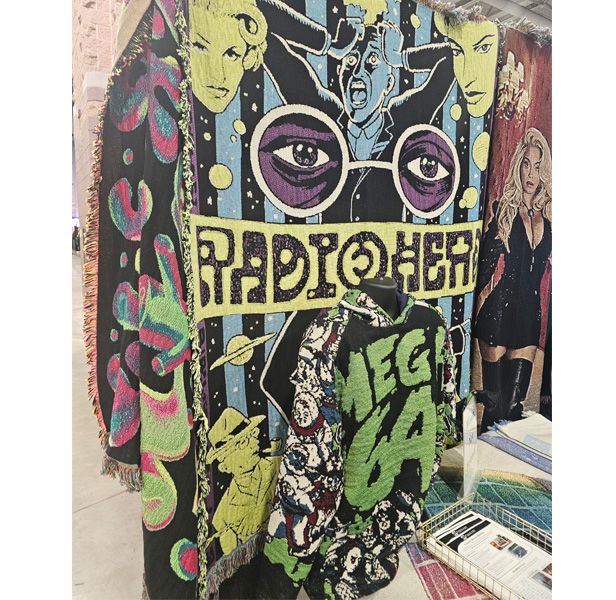
Custom woven blankets from FiberArt are particularly popular in the music merch space.
“You can put anything on a blanket,” she adds, noting that the product has found a particular niche in the music industry as unique concert merch.
In addition to being USA-made, the company has put a strong focus on sustainability, with blankets using 25% recycled cotton. A few years ago, Clark says, the company invested $6 million in all-new infrastructure, which includes a solar farm on the roof. “We weave everything using solar power,” she adds.
The company also has a minimum order quantity of one so that clients don’t feel pressured to meet higher minimums. “We found that leads to a lot of waste,” Clark adds.
4. ‘Tie-Dye Season’ Is Underway
Spring and summer are the unofficial hot seasons for tie-dye, according to Kevin Dunham, vice president of sales at Colortone (asi/45581). That’s when schools and camps are looking for colorful tees for students to wear for field days, class trips and other events.
Bold, bright colors were trending a few years ago, he says, but these days, many customers are looking for more muted tones, like olives and navies. Specialty washes, with a more muted effect than traditional tie-dye, are also popular. Dunham points to the supplier’s crystal wash – a “low immersion” dyeing technique that results in a distinct, speckled crystalline pattern – as particularly popular.
Other hot treatments include a “vintage spray” that gives tees “a subtle ombré look,” Dunham says. The supplier will be releasing the treatment in the next month, and Dunham expects it to be particularly popular in the licensing space and for music merch.