
Printing July 31, 2026
Tap Into the Vintage Aesthetic for Trendy T-Shirts
A modern yet vintage-style tee isn’t an oxymoron.
Key Takeaways
• Gen Z’s interest in secondhand fashion is driving demand for vintage-inspired apparel.
• Apparel experts say retro artwork, distressed logos and bold colors can help brands recreate a vintage aesthetic.
• Garment dyeing, discharge ink and crackle additives are among the techniques available for achieving a lived-in look.
Gen Z consumer habits have turned vintage apparel into big business.
The demographic has helped turn secondhand apparel shopping in the U.S. into an approximately $56 billion market, according to a recent report from the online thrift store ThredUp.
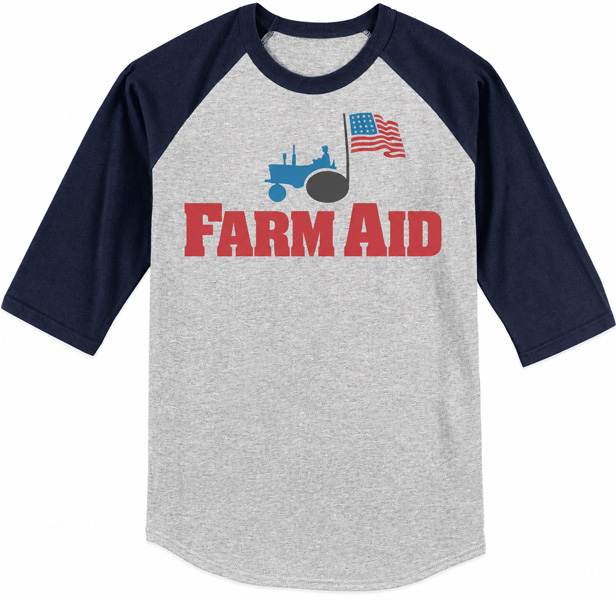
Mirror Image created this Farm Aid shirt, copying a design from 1985. (photo courtesy of Rick Roth)
For some young consumers, the appeal of vintage shopping comes from the rarity and uniqueness of items found at a thrift store. Others want to shop more sustainably, so they opt for something that’s already been worn.
But there are ways for promo pros to tap into the trend for more stylish apparel.
For a T-shirt to fit into the vintage aesthetic, it doesn’t have to be made before the turn of the century. The style can be replicated by the fit, art and printing techniques.
Origins of the Trend
It’s likely that rising consumer costs have influenced the popularity in secondhand shopping. But there’s also been an increased interest in ‘90s-style T-shirts, with consumers looking for things like a more boxy, relaxed fit; big, bright prints; and distressed logos.
“Like any trend, they all kind of come full circle,” says Tim Gibson, president of sales at U.S. Standard Apparel (asi/93179). “I think people are just getting more nostalgic as of late. Like they’re wanting to wear things that are more vintage, more analog, less digital.”
It’s widely believed that styles come back into fashion once every 20 years or so – a recent study from Northwestern University showed this phenomenon is more than just anecdotal. It’s mathematically provable.
Researchers analyzed tens of thousands of garments, based on the idea that trends become popular, fall out of favor once people find them too common and then eventually come back.
In the social media era, style cycles have been truncated, with micro-trends popping up every few months, and multiple fashion aesthetics in vogue at the same time. For instance, though there’s plenty of evidence that the ‘90s is still in play, apparel suppliers have also started to cycle back in the thinner fabrics that rose in popularity in the aughts.
“There’s really no accounting for taste,” says Rick Roth, president of Mirror Image. “Taste just morphs over time from one thing to another.”
The Significance of T-Shirt Fit
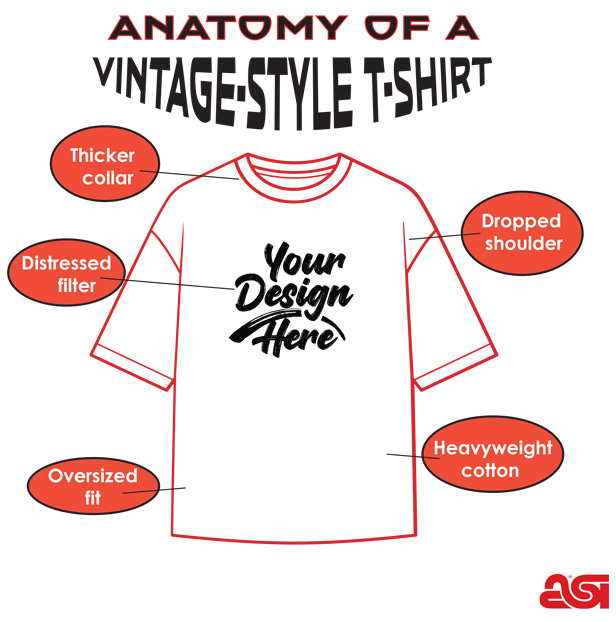
Key characteristics of a vintage-style T-shirt are seen in modern-day streetwear. Heavyweight cotton has become more popular, and that influences the way the T-shirt drapes.
Up until a few years ago, lighter, more formfitting fabrics were popular, Roth says.
“Now, it’s like you almost can presume a heavy shirt until you hear otherwise,” Roth says. “They’re just absolutely off the hook.”
Garment-dyed T-shirts, or shirts that are fully sewn from raw, undyed fabric and then dyed as a complete finished product, are also worth considering. The garment-dyeing process gives apparel a lived-in, vintage look. Plus, consumers tend to like the style because the garment-dyeing process is akin to laundering, so such tees don’t shrink after the first wash, Roth says.
Other details to consider are a dropped shoulder, thicker neckband and a more relaxed fit.
The Appeal of Vintage-Look Logos
Logos and graphics also influence a T-shirt’s “cool factor.”
“Artwork is key,” Gibson says. “Finding artwork that’s vintage and replicating that even with a corporate logo or a customer’s logo is easily done with some distressing and some other tools you can use in the art process.”
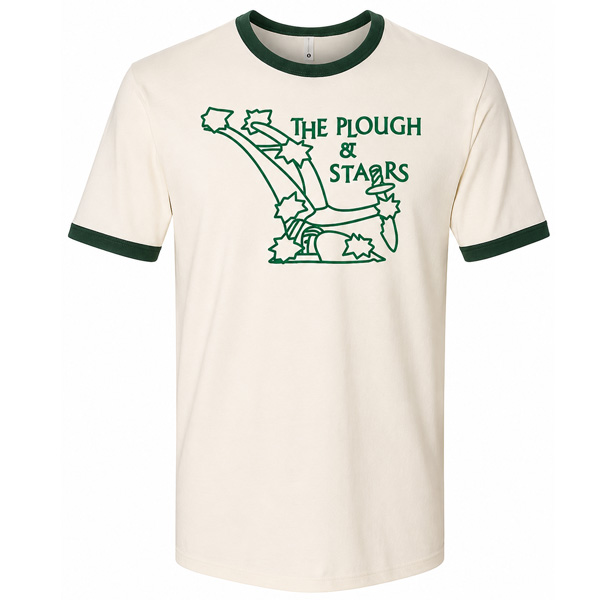
Mirror Image recreated an old shirt style and design to sell for The Plough and Stars, a bar and music venue in Cambridge, MA. (photo courtesy of Rick Roth)
There are a few options for giving logos a retro look. First, companies can choose bold, saturated colors for a “Fresh Prince of Bel-Air” aesthetic. The other route is to make a new logo look lived-in, like the quintessential ‘90s-era band tee that’s been washed and worn for decades. Distressed designs feature large text, faded colors, rough textures and ink that appears cracked.
“A lot of even newer artists are wanting a more vintage look to their logo. Music always dictates culture,” Gibson says. “Whatever’s trending from a pop or musical standing, that’s kind of what influences art and even apparel.”
Another way brands can tap into nostalgia is to delve into their archives and revive a decades-old logo for new logoed apparel. A few years ago, for example, Ace Hardware celebrated its centennial by releasing shirts and hats featuring logos from its hundred-year history. Going that route simultaneously taps into the vintage design aesthetic and fosters a sense of pride in the company’s history.
Printing Techniques for a Vintage Aesthetic
While a distressed look can come from normal wear and tear, there are ways to replicate the aesthetic on new apparel.
Distress filters can be added to digital artwork before it’s printed, for example, though Roth cautions decorators not to make the cracks in the artwork too thin, since they’d be more likely to be filled in with ink, negating the distress effect.
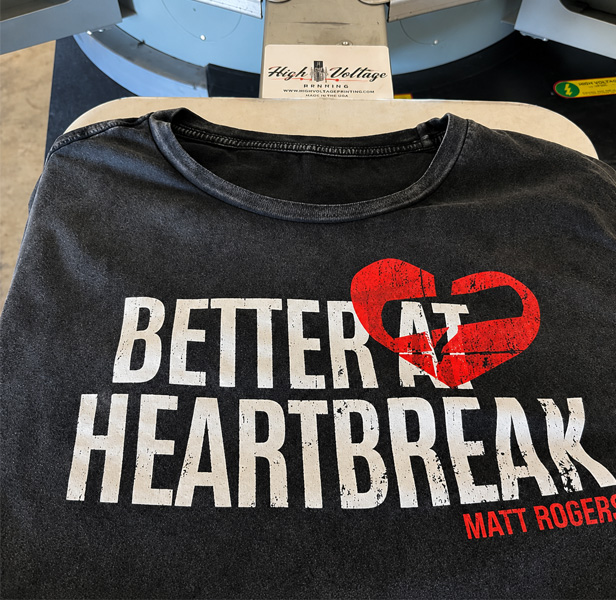
Screen-printing techniques can help create a shirt with a vintage feel. (photo courtesy of Tim Gibson)
Other options for creating a distressed look include doing a partial underprint, for a thinner, more vintage look, according to Roth.
“A lot of people make the mistake of underprinting too thick,” he says. “You can actually get a better underprint sometimes with two screens, two hits versus one hit.”
Discharge ink, which chemically removes a shirt’s dye and replaces it with a new pigment, is another option for soft, worn and vintage-looking prints, Roth says.
Crackle additives can also be used to give artwork an aged look, according to Gibson, who wrote a step-by-step tutorial on how to achieve vintage-look prints for Apparelist, a publication of PRINTING United Alliance, ASI’s strategic media partner.

Print & Promo Marketing is your source for news, commentary and strategy for the promotional products, commercial print and product decoration industries.