
Printing April 27, 2026
The Benefits of Sourcing Locally for DTF Transfers
The direct-to-film market has matured, and there are plenty of local vendors with industrial-grade equipment, who can also provide benefits like quick turns, human review and just-in-time fulfillment.
Key Takeaways
• Local direct-to-film vendors can deliver major operational advantages over national suppliers, including same- or next-day turnaround, no shipping costs and faster iteration.
• Working with nearby partners improves quality control and reduces costly errors, thanks to hands-on collaboration and human preflight checks.
• The shift toward local sourcing reflects broader supply chain realities, with decorators prioritizing speed, flexibility and margin protection.
A client calls. They need 30 branded polos for a corporate event – in four days. You check with your national direct-to-film (DTF) supplier: two days of production, then ground shipping that adds five to seven more. The order’s dead before you hit submit. You lose the job, or you scramble, or you absorb the rush fee yourself.
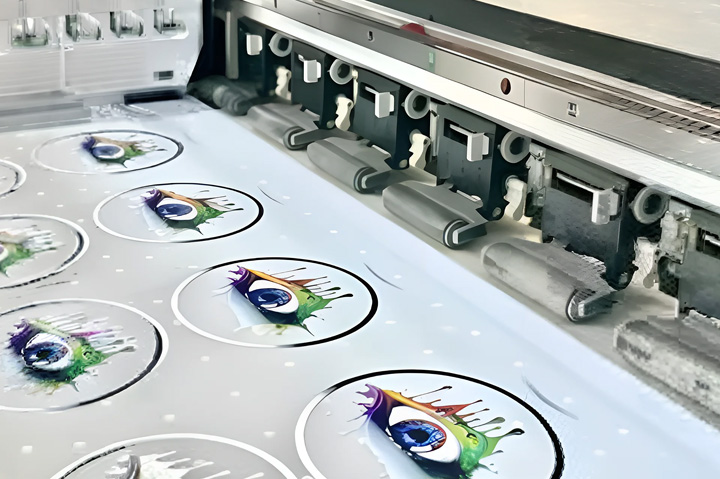
Agoura Hills, CA-based Mugsie prints custom DTF transfers. (photo courtesy of Sid Gaffar)
This isn’t an edge case. It’s the everyday operational cost of building a decorating business around a supplier that’s geographically disconnected from your production floor. The DTF market has matured – and with it, a new generation of local vendors running industrial-grade equipment, offering same-day or next-day turnaround, and operating without minimums. The gap between “local” and “professional” has closed. The gap between local and national, in what it costs to run a business, hasn’t.
For distributors and decorators evaluating their supply chain, here’s what a well-chosen local DTF vendor delivers that a national platform simply cannot:
- Turnaround in hours, not days: That includes same-day iteration on color or sizing corrections before a full run goes to press.
- Zero shipping costs: Freight on a $30 to $60 transfer order can consume 20% to 40% of total order value.
- Human preflight review: A trained operator can catch file errors before they become reprint costs, not after.
- No minimums, no over-ordering: Gang sheet flexibility makes just-in-time ordering viable across multiple client SKUs.
- A vendor with skin in the game: Losing your account is a meaningful business event, not a rounding error.
The Shipping Math Nobody Talks About
National DTF suppliers typically run a 24- to 48-hour production window before handing off to ground shipping, which adds three to seven business days depending on geography. Effective lead time from order to press: five to nine business days. A local vendor running same-day or next-day production eliminates that shipping leg entirely, and with it, a freight bill that silently erodes margins on every order.
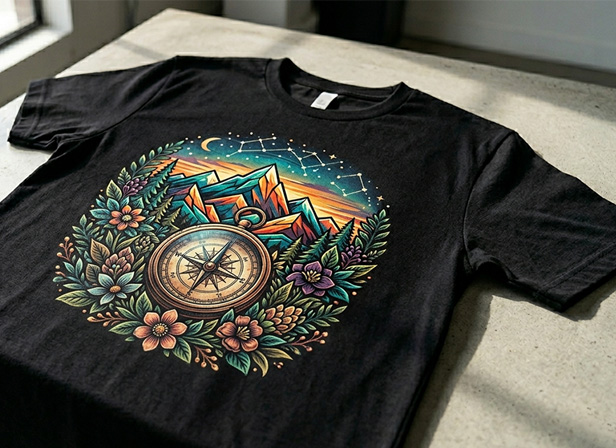
Mugsie shows off a DTF print on a black tee. (photo courtesy of Sid Gaffar)
The speed advantage compounds beyond raw turnaround. When a decorator works with a supplier they can visit in person, same-day iteration becomes possible: test print in the morning, color correction approved by noon, production batch ready by end of day. That closed-loop feedback cycle is the difference between catching a color shift before 200 garments are pressed and discovering it after. No national platform, however efficient, can offer it.
Industrial Equipment & Human Preflight
Not all local DTF vendors are operating the same class of equipment. The decline in entry-level printer prices has created a proliferation of hobbyist setups running consumer-grade machines alongside commercial shops running industrial production systems. From the outside, both are “local DTF vendors.” The wash-fastness ratings and your reprint rate tell a different story.
Industrial DTF systems use certified pigment inks, precisely calibrated powder application and temperature-controlled curing. The result is a transfer rated for 50 to 100 or more wash cycles without cracking, fading or adhesion failure. Consumer setups introduce variability at every stage, an invisible defect that only surfaces after your client has laundered the garment a few times and the reputational damage is done.
Quality assurance starts before the job runs. Large national platforms are black boxes: You upload a file, the system accepts it and you wait. A local vendor with a human preflight process has a trained operator reviewing every file before it goes to print, catching low-resolution artwork, incomplete background removal, color profile mismatches and incorrect sizing before they become a reprint. For a business running on tight margins, a single avoided reprint batch covers the cost of multiple orders.
Just-in-Time DTF Ordering
National platforms structure pricing around volume. Small runs carry a per-unit premium, and minimum order quantities push decorators toward over-ordering to access competitive rates – the opposite of the just-in-time model most promo businesses depend on. Local vendors typically operate without minimums and support multi-design gang sheet ordering, nesting several artwork files on a single film sheet and charging for area used. For a decorator managing 10 to 20 client SKUs in small quantities, that means printing exactly what’s selling, when it’s selling.
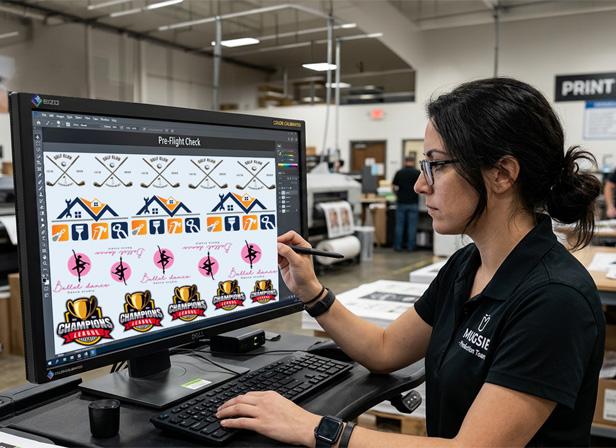
Local DTF vendors can offer human preflight review to avoid costly reprints. (photo courtesy of Sid Gaffar)
The accountability structure differs, too. When an order goes wrong with a national supplier, resolution means a support ticket, return shipping and a two- to three-week wait. With a local vendor, it’s a direct conversation: same-day assessment, next-day correction. A local vendor losing your account is a meaningful business event. For a national platform, it’s a rounding error. That asymmetry shows up in service standards on every order.
The case for local DTF sourcing is strong, but it depends on finding a vendor operating at a professional standard. Verify the equipment class, confirm human preflight review and request samples before you commit. The difference between an industrial operation and a desktop setup isn’t visible in a price list. It shows up in your product quality, your reprint rate and whether you can take that four-day rush order the next time a client calls.
3 Questions To Ask Before Sourcing Local
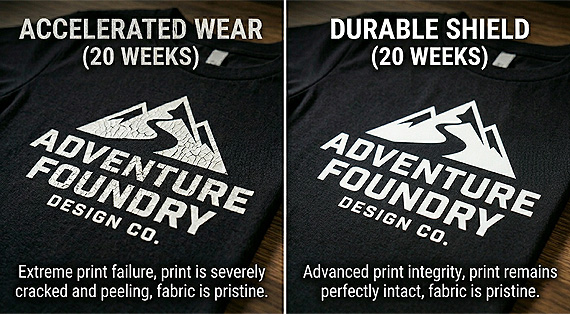
Look for DTF vendors that can share wash-durability data for their products. (photo courtesy of Sid Gaffar)
Not all local DTF vendors deliver the same result. Before committing, ask:
- What class of printer and ink system do you run? Industrial systems from companies like Epson, Mutoh or Roland use certified pigment inks. Hobbyist setups don’t.
- Do you have wash-durability data for 50+ cycles? A professional operation will provide this without hesitation. Vague answers are a disqualifying signal.
- Do you perform a human preflight review on every file? Automated platforms accept any file. A trained operator catches the errors that cause reprints.
A vendor who can answer all three questions confidently is worth a sample order. One who hesitates is also telling you something and should likely be avoided.

Print & Promo Marketing is your source for news, commentary and strategy for the promotional products, commercial print and product decoration industries.