
News December 22, 2025
Top 10 of 2025: News Stories
M&A activity, industry lawsuits, USPS shakeups and – of course – tariff updates were among the most popular stories from ASI Media this year.
It’s been quite a year for the promotional products industry. With the introduction of new tariffs, trade negotiations between the U.S. and foreign partners, and a Supreme Court case challenging the legality of some of Trump’s levies, promo companies had their eyes peeled for updates on global trade. So, it’s no surprise that many of our top stories in 2025 focused on the impact of tariffs on the promotional products industry – and what they mean for business moving forward.
But it wasn’t just topics of global trade and economic uncertainty that captured reader interest these past 12 months. Big industry shakeups, like lawsuits, acquisitions and negotiations drew in our audience. Meanwhile, readers followed closely as new legislation and executive actions threatened to upend operations at the United States Postal Service.
Here are the top 10 promotional products news stories of 2025 from ASI Media.
1
Trump Reportedly Wants To Absorb USPS Into the Commerce Dept.
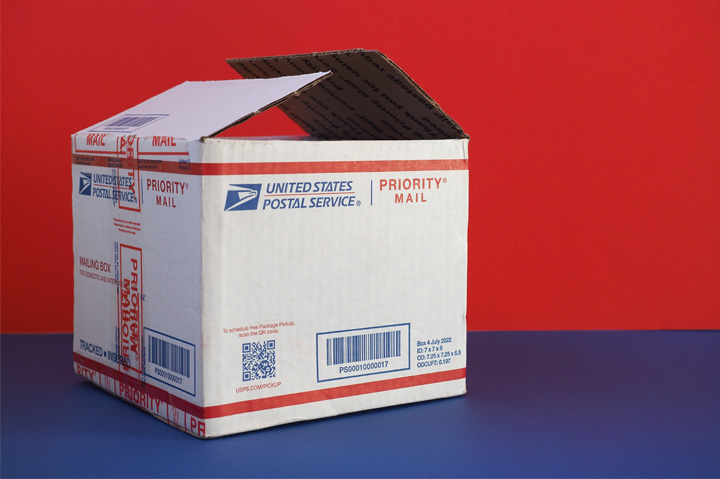
In February, President Trump announced plans to absorb the USPS into the Commerce Department. Reports of the administration’s plans for the postal service came just days after Postmaster General Louis DeJoy stepped down from his role. The promo impact of this change would be monumental, resulting in potential shifts in delivery schedules and delays that would surely alter how distributors get products in the hands of end-users. These changes could hamper promo companies’ ability to advertise via direct mail. The noise around the USPS’ potential merger with the Commerce Department has since quieted, but the article’s high engagement figures show our audience is following closely.
2
The Fallout From Trump’s ‘Worse Than Expected’ Tariffs
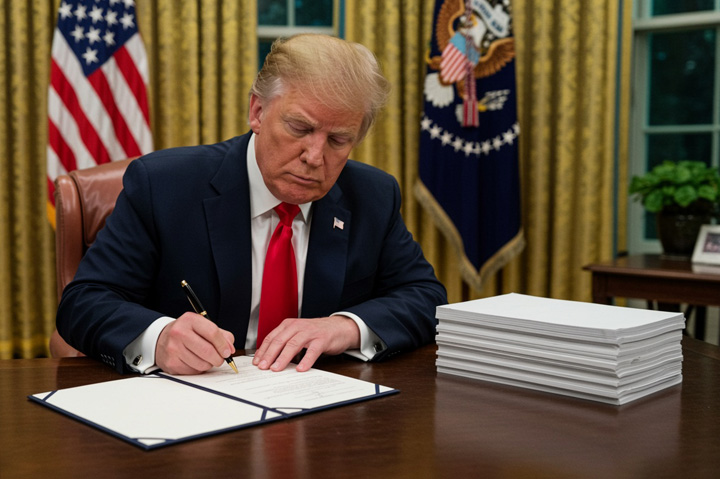
After President Trump announced sweeping levies on foreign goods on April 2 – what would become known as “Liberation Day” – the promo industry had questions. Part of an industry heavily reliant on foreign manufacturing and global trade, suppliers and distributors braced for impact. So, perhaps it’s no surprise that this article, published the day after the announcement of a baseline 10% tariff on all foreign goods, was among the top performing stories of the year. Leaders across the industry shared their thoughts about and responses to the tariff announcement and what it might mean for the future of promo.
3
Promo Industry Rebounds in Q3 With Highest Sales Growth in 2 Years

When new tariffs were announced at the start of the year, then took effect a few months later, the promo industry felt the impact directly. Q1 sales dropped by 3.6%, and Q2 sales dipped 3.2% compared to the same time last year. But Q3 figures increased 5% year over year in what was a welcome reprieve for companies across the industry. The data signaled a potential sign of economic recovery after a year that was fraught with financial instability for many promo companies. And readers embraced the good news with open arms.
4
U.S. & China Officials Reach Tentative Tariff Agreement
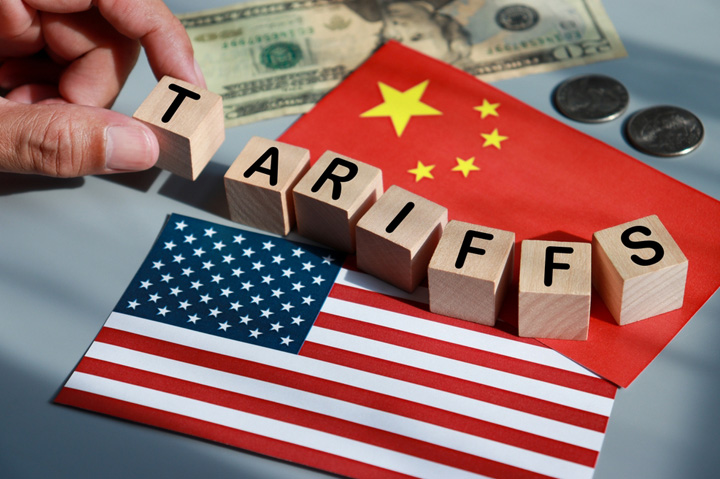
October was a busy month for global trade. It began with President Trump threatening an additional 100% tariff on Chinese goods after the country added restrictions on critical rare earth materials used in electronics and military fighter jets. Trump and Chinese President Xi Jinping continued playing a game of cat and mouse throughout the month, threatening levies and retaliations until the two scheduled a meeting to sort things out. By the end of October, Trump had walked back his initial 100% tariff threat, and the two leaders had reached a tentative agreement. After the trade talks, both countries agreed to suspend port fees on each other’s ships for a year. Additionally, President Trump announced he would cut the “fentanyl” tariff on Chinese goods entering the U.S. from 20% down to 10%. ASI Media’s post-meeting analysis also drew large engagement numbers.
5
UniFirst Rebuffs Cintas’ $5.3 Billion Acquisition Offer

The year started out with a bang when Counselor Top 40 distributor Cintas (asi/162167) set out to acquire all outstanding common and Class B shares of uniform provider UniFirst, with a total value of $5.3 billion in cash. Cintas CEO Todd Schneider said the offer would “deliver immediate and compelling value” to UniFirst shareholders, adding that the acquisition would enhance both companies’ tech investments. UniFirst, for its part, could not have been less interested, with its board of directors calling the deal “unsolicited, non-binding and highly conditional.” Cintas ultimately ended the acquisition bid in March, but proposed a fresh bid in mid-December for $5.2 billion.
What Will the Future of Tariffs Look Like? The Supreme Court Could Help Decide
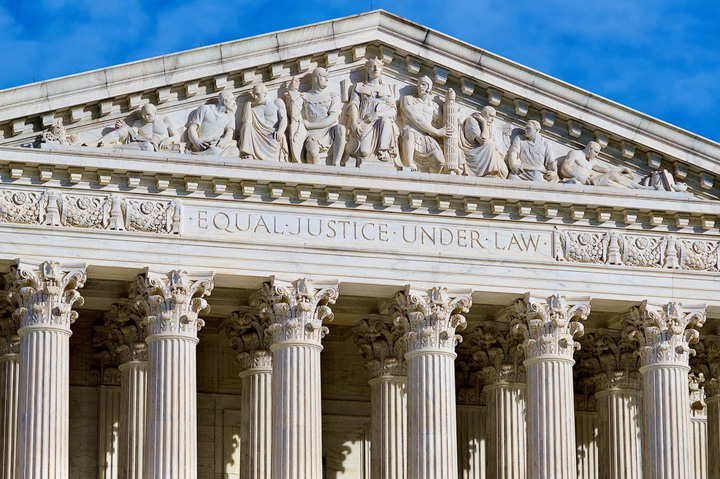
Remember when we said October was a busy month for global trade? It was also the month leading up to one of the biggest economic cases to reach the Supreme Court in recent history. On Nov. 5, the Supreme Court heard a pivotal case to determine the constitutionality of many of Trump’s tariffs. The Supreme Court is set to decide whether Trump has the power to impose tariffs under the International Emergency Economic Powers Act (IEEPA) – notably the initial 10% base tariff, the targeted “reciprocal tariffs” and the “trafficked tariffs” designed to curb the flow of illegal drugs into the U.S. While the court is not expected to make a final decision until June 2026, ASI Media has been following the case closely, speaking to promo leaders, economists and trade attorneys about how this case could play out.
7
Rising Costs & Supply Chain Shifts: The Potential Fallout for Promo From Trump’s New Tariffs
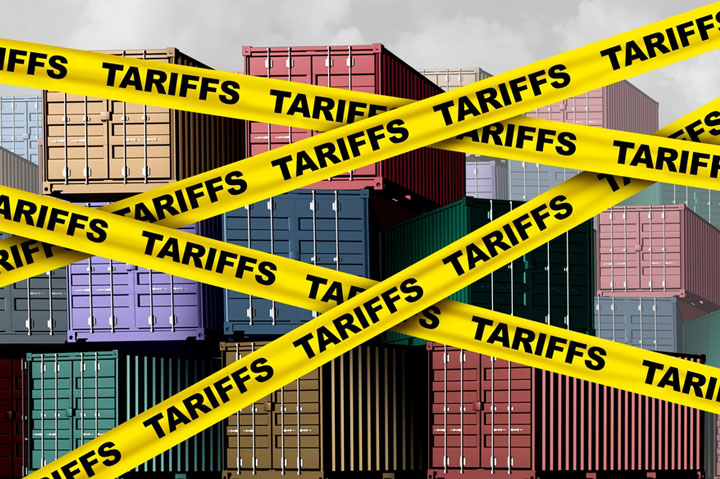
On Feb. 1, President Trump announced plans to enact new tariffs: a 5% tax on imports from Canada and Mexico, a 10% tariff on energy products from Canada and a 10% tariff on China-made goods in addition to existing levies on the country. He subsequently suspended the tariffs on Mexico and Canada days later, when the China tariffs officially went into effect. The news came at a time when promo professionals had more questions about these tariffs than answers. A lot has changed since then, but ASI Media has been tracking the activity all year to keep readers updated on all the latest tariff news and updates. And we’ll be sure to do the same in 2026.
8
BDA Acquires Harper + Scott

In one of the most high-profile promo acquisitions of the year, Counselor Top 40 distributor BDA (asi/137616) announced the purchase of New York City-based distributor Harper + Scott (asi/220052), a Counselor Best Place to Work. Harper + Scott has retained its name and now operates as a sub-brand of BDA. While financial terms of the deal were not released, ASI Media followed the movers and shakers of the deal closely.
9
New Bill Would Allow USPS To Deliver Alcoholic Beverages to Of-Age Consumers

In April, the U.S. House of Representatives introduced a bipartisan bill that would allow alcoholic beverage providers, including those that sell in the promo space, to ship products directly to consumers over the age of 21. Proposed by Rep. Suhas Subramanyam (D-VA) and Rep. Dan Newhouse (R-WA), the bill is of particular interest to the promo industry given that a percentage of distributor revenue comes directly from food gifts, which include alcohol. The bill, which has yet to pass, could also be good news for label makers, offering a print opportunity to include alcohol in branded kits, and potentially increasing demand for labels at smaller breweries, distilleries and wineries.
10
S&S Activewear Files Lawsuit, Accuses PromoHunt of Illegally Accessing Data

Counselor Top 40 supplier S&S Activewear (asi/84358) filed a lawsuit against PromoHunt in September, claiming the service provider illegally accessed S&S data by asking users to share login credentials or API keys, therefore violating S&S’s Terms of Use. S&S also alleged that PromoHunt used its trademarks, along with those of alphabroder (which S&S acquired in 2024), without authorization. The lawsuit turned heads across the industry, raising important questions about copyright infringement and data ownership in an increasingly digital world.