
Strategy February 03, 2026
What Promo Needs To Know About Commercial Printing
For distributors looking to increase margins or expand services, here’s a rundown of the pros and cons of common printing techniques.
Key Takeaways
• Distributors looking to improve margins and turnaround times can expand services by understanding commercial print capabilities and deciding when to partner with print service providers versus bringing production in-house.
• The article breaks down major printing methods – including digital, offset, direct to object, wide format, screen printing and heat-applied printing – outlining which applications and run sizes each technology best supports.
• Successful print execution requires more than a press, with workflow software and finishing steps like cutting and folding playing a major role in cost, speed and quality.
As distributors continue to look for ways to increase margins, control turnaround times and expand service offerings, it’s important to understand existing printing capabilities to better partner with print service providers (PSPs) or possibly bring the technology in-house. Whether it’s short-run marketing collateral, personalized inserts, labels, packaging or variable data pieces, understanding the basics of commercial printing is the first step toward forging strong relationships with PSPs or making smart investments.
The Major Printing Techniques
Not all printing techniques are created equal. Different technologies are designed for different volumes, substrates, quality requirements and business models. Here are some key things to know.
Digital printing: Often the entry point for promo companies that want to bring printing capabilities in-house, it helps to know when digital printing makes sense, whether making an investment or working with a PSP that has digital technology.
In digital printing, files are printed directly from a digital file to the press, so plates aren’t required. It’s ideal for short-run jobs and quick turnaround times, and it enables personalization and variable data printing – a digital, on-demand process also referred to as VDP – with lower setup costs. Inkjet- and toner-based digital technology is a great option for everything from postcards and personalized marketing pieces to labels.
While partnering with a knowledgeable PSP that can offer guidance is a great option, for those looking to invest in equipment, there are some entry- and mid-level inkjet and toner options that would make a good starting point, including various models from Canon, Ricoh, Fujifilm and Kyocera, although several other original equipment manufacturers (OEMs) have options as well.
Offset lithography: Offset remains the traditional method for long-run, high-quality commercial printing. While it’s cost-effective for the production of long-run catalogs, publications, books, direct mail, marketing collateral and newspapers, it’s probably not feasible for distributors to bring offset printing technology in-house due to cost, footprint and skill needed to operate. If a distributor has the need for a long-run job, turning to a PSP that has offset technology is the best bet.
Offset printing (sometimes referred to as an “analog” printing process) relies on physical printing plates. While an offset process typically has a longer setup time and isn’t usually economical for VDP, it can be lower cost at scale, and some still argue that digital printing quality does not yet match that of offset quality (although digital has advanced significantly over its lifespan and can rival the quality of offset print).
Direct to object (DTO): Exactly what it sounds like, this is an area where many hard goods suppliers focus. It allows users to print directly onto three-dimensional finished items, rather than with the use of labels or transfers. It can be used for items such as pens, bottles, USB drives, promo packaging and mugs. The process is usually done with UV inkjet technology, using UV light to instantly cure the light as it’s printed.
Most of the entry- to mid-level DTO technology is best for shorter runs, but since the footprint of the equipment is generally small, it could be a good option for distributors looking to do some short-run or one-off printing. Options from OEMs, such as LSINC and Inkcups, are available.
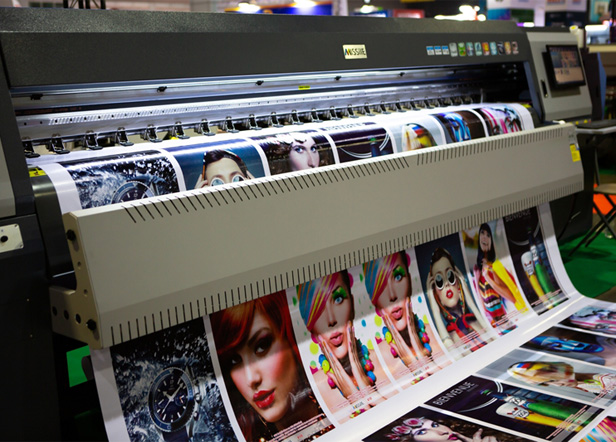
Wide-format printing: Wide-format or large-format printing is commonly used for signage and displays using roll-to-roll, flatbed or hybrid technology. If a distributor is looking to pair a campaign with larger graphics, partnering with a PSP or sourcing from a supplier that prints event signage is probably the best route.
Screen printing: A traditional way to decorate apparel, screen printing comes in two versions: manual and auto press. Most apparel decorators get their start with a manual due to space and cost restrictions then work their way up to an auto press. Screen printing is often viewed as a more laborious, skilled technique as it requires art and prepress production, developing screens and washing them out after printing. Distributors often outsource to contract decorators for bulk jobs with lower color counts.
Heat-applied printing: Anything from screen-printed transfers to heat-transfer vinyl and even direct-to-film transfers is categorized under heat-applied printing. This is often the easiest apparel decorating method to bring in-house for distributors, as it only requires a heat press at the very minimum. You can order preprinted transfers and apply them with a press using the equipment supplier’s guidelines.
Understanding the Printing Process
Investing in printing technology or working on a job with a PSP will involve more than just use of a printing press. PSPs use software for order intake; estimating and information management; to handle, prep and proof files; automate and process jobs; manage color; production planning and scheduling; and finishing and post-press routing.
One of the aspects of printing that’s often overlooked is the finishing process. Every job needs to be finished, such as cutting or folding and gluing, so it’s crucial to think about finishing before making any investment into printing technology. Experienced PSPs know the process and can guide a distributor’s job through every step seamlessly.
Choosing the Right Path for Printing
When done strategically, in-house printing allows distributors to capture more margin, reduce outsourcing delays, offer bundled print and product solutions, add personalization and data-driven value, and strengthen customer relationships. However, bringing printing technology in-house doesn’t mean making an investment in one device and jumping right in. Many processes require a deep skill and understanding, as well as the right job sizes to justify the cost. Working with a PSP will be the right option for many distributors.
Commercial printing can seem complex, but at its core, it’s a manufacturing process focused on efficiency, quality and consistency. For promotional products companies, understanding the basics of printing technologies, workflows and terminology is always beneficial, but absolutely critical before making an investment.